

%20Directive.webp)
- The ECGT (Empowering Consumers for the Green Transition) fundamentally changes environmental marketing.
- The Law: An EU directive banning greenwashing and "unfair" environmental claims.
- The Bans: No generic terms like "eco-friendly" without certification. No "carbon neutral" claims based on offsetting. No self-made labels.
- The Requirements: Claims must be specific and backed by verifiable data.
- The Timeline: Full compliance is required by September 27, 2026.
- The Solution: Use granular, activity-based carbon data from platforms like Arbor to measure, reduce, and prove your impact.
What is the EU’s Directive on Empowering Consumers for the Green Transition (ECGT)?
The era of vague green claims is ending. For decades, the sustainability market has operated with few rules, leading to a landscape where "eco-friendly" stickers mean very little.
The European Union is now stepping in to regulate this chaos with a new law: the Directive on Empowering Consumers for the Green Transition, or ECGT.
This is not a voluntary guideline. It is a strict regulation that changes how companies must communicate their environmental impact. If you sell products to consumers in the EU, you need to understand these rules.
This guide explains the regulation, why it matters, and what you must do to comply.
What is the ECGT?
The ECGT - Directive (EU) 2024/825 is a legal framework designed to stop "greenwashing." Greenwashing occurs when a company spends more effort marketing itself as sustainable than it does actually minimizing its environmental footprint.
Recent studies by the European Commission found that over half of environmental claims in the EU were misleading or unfounded. This created confusion for consumers and unfair competition for businesses that were truly investing in sustainability.
The ECGT addresses this by amending two major pieces of EU consumer law:
By updating these laws, the EU has created a "safety net" to catch deceptive marketing. It shifts the burden of proof to the company. You cannot simply claim to be green anymore. You must prove it with specific, verifiable data.
How does the ECGT work?
The directive defines what counts as an "unfair commercial practice." If a practice is deemed unfair, it is illegal. The ECGT works on a "blacklist" principle.
This means it establishes a list of marketing behaviours that are prohibited in all circumstances. Regulators do not need to prove a consumer was tricked. The simple use of a banned term is enough to constitute a violation.
The regulation targets two main areas:
1. Restoring Trust
It bans generic claims that are not backed by excellence. You cannot use broad terms like "environmentally friendly" unless your product is certified by a top-tier scheme like the EU Ecolabel.
2. Enforcing Transparency
It targets "planned obsolescence," which is the practice of designing products to break early. It forces companies to be honest about durability and repairability.
If a software update slows an older phone, you must disclose this. If a product cannot be repaired, do not imply it can.
What are the requirements of the ECGT?
The requirements are extensive, but they center on a few critical bans. Understanding these prohibitions is key to avoiding legal trouble.
The ban on generic environmental claims
The directive explicitly prohibits the use of "generic" environmental claims if the trader cannot demonstrate recognized excellent environmental performance.
A generic claim is a broad statement that implies a positive environmental benefit but is not specific.
Examples of banned generic terms include:
- "Green"
- "Nature’s friend"
- "Climate-friendly"
- "Energy efficient"
- "Eco-friendly"
- "Biodegradable"
How to comply
You are only allowed to use these terms if your product meets a remarkably high standard of excellence, such as achieving the EU Ecolabel or an equivalent ISO 14024 Type I ecolabel.
If your product is simply better than the industry average, you cannot use these terms.
Instead, you must use specific claims.
- Don't say: "Green Packaging."
- Do say: "Packaging made with 50% recycled materials."
The end of "climate neutral" claims based on offsetting
This requirement forces a significant shift in corporate climate strategy. The ECGT prohibits claims that a product has a neutral, reduced, or positive impact on the environment with respect to greenhouse gas emissions when those claims rely on carbon offsetting.
For years, brands have marketed products as "carbon neutral" by calculating emissions and buying cheap credits to "offset" the impact. The EU has effectively criminalized this practice for products.
Banned claims include:
- "Climate Neutral"
- "Carbon Neutral"
- "Carbon Positive"
- "Climate Compensated"
The new standard
Companies can still discuss their climate efforts, but the focus must be on actual reductions within their own supply chain.
You can advertise that you have reduced your product's carbon footprint, but only if that reduction is real and measurable. You cannot pay someone else to reduce emissions for you and then claim the credit on your product packaging.
Prohibition of self-made sustainability labels
The era of the self-certified label is over. Many brands have created their own icons that look like official certifications. The ECGT bans the display of any sustainability label that is not based on a certification scheme or established by public authorities.
To use a label, it must be verified by a third party. The certification process must be transparent, open to all, and audited. If you have an internal "green" logo that has not been vetted by an outside body, you must remove it.
Transparency on durability and repairability
Traders must provide clearer information about product lifespan and repair options.
- Durability: You cannot claim a product lasts for a specific number of uses or years if it does not.
- Repairability: You must provide information on repairability scores and the availability of spare parts.
- Software: You cannot withhold information about software updates that might negatively impact a device's performance.
When does the ECGT become mandatory?
The timeline is strict. While it may seem like there is time, the complexity of gathering supply chain data means you should start preparing now.
Entry into force:
March 26, 2024. The law is officially on the books.
Transposition deadline:
March 27, 2026. Each EU member state (such as France, Germany, and Italy) must translate the directive into its national law by this date.
Application date:
September 27, 2026. This is the hard deadline for businesses.
Any product on the shelf or any website accessible to EU consumers after this date must comply with the new rules. If your marketing materials or packaging still contain banned claims after September 2026, you will be liable for penalties.
Who needs to comply with the ECGT?
A common misconception is that EU laws only apply to EU companies. This is false. The ECGT applies to any trader engaging in commercial practices towards EU consumers.
Global Reach
It does not matter if you are a US-based fashion brand, a Canadian electronics manufacturer, or an Asian supplier. If you sell directly to customers in Europe, you must comply.
If your website ships to the EU and makes a claim like "Carbon Neutral Shipping," you are subject to these laws.
The B2B Ripple Effect
While the law targets Business-to-Consumer (B2C) transactions, it impacts the Business-to-Business (B2B) sector heavily. Retailers in the EU will face fines if they sell non-compliant products.
Consequently, they will demand rigorous proof from their suppliers.
If you are a supplier, your retail partners will likely require you to indemnify them against greenwashing fines. They will demand primary data to prove your environmental claims. If you cannot provide this data, you risk being delisted because the retailer cannot afford to take the risk.
Why should you care about the ECGT?
Ignoring the ECGT is a high-risk strategy that could cost your company millions and damage your brand.
Financial Penalties
Member states can impose fines of up to 4% of your annual turnover in the countries where the violation occurred. For a large enterprise, this could amount to significant losses. Authorities also have the power to confiscate revenues gained from transactions related to misleading claims.
Litigation Risks
The directive empowers "interested parties" to take action. This includes your competitors. If you use vague marketing while your competitor invests in real decarbonization, they can sue you for unfair competition. This creates a self-policing market where rivals are incentivized to check your claims. NGOs also gain new legal tools to challenge vague "net-zero" promises in court.
Reputation and Market Access
Being publicly flagged as a "greenwasher" can destroy consumer trust. Furthermore, compliant companies will likely be favoured in public procurement tenders, while non-compliant ones may be excluded from public funding.
How can Arbor help you with the ECGT?
Compliance is a data challenge. You cannot claim what you cannot prove.
Arbor provides the tools to bridge the gap between marketing promises and engineering reality.
Switch to Activity-Based Data
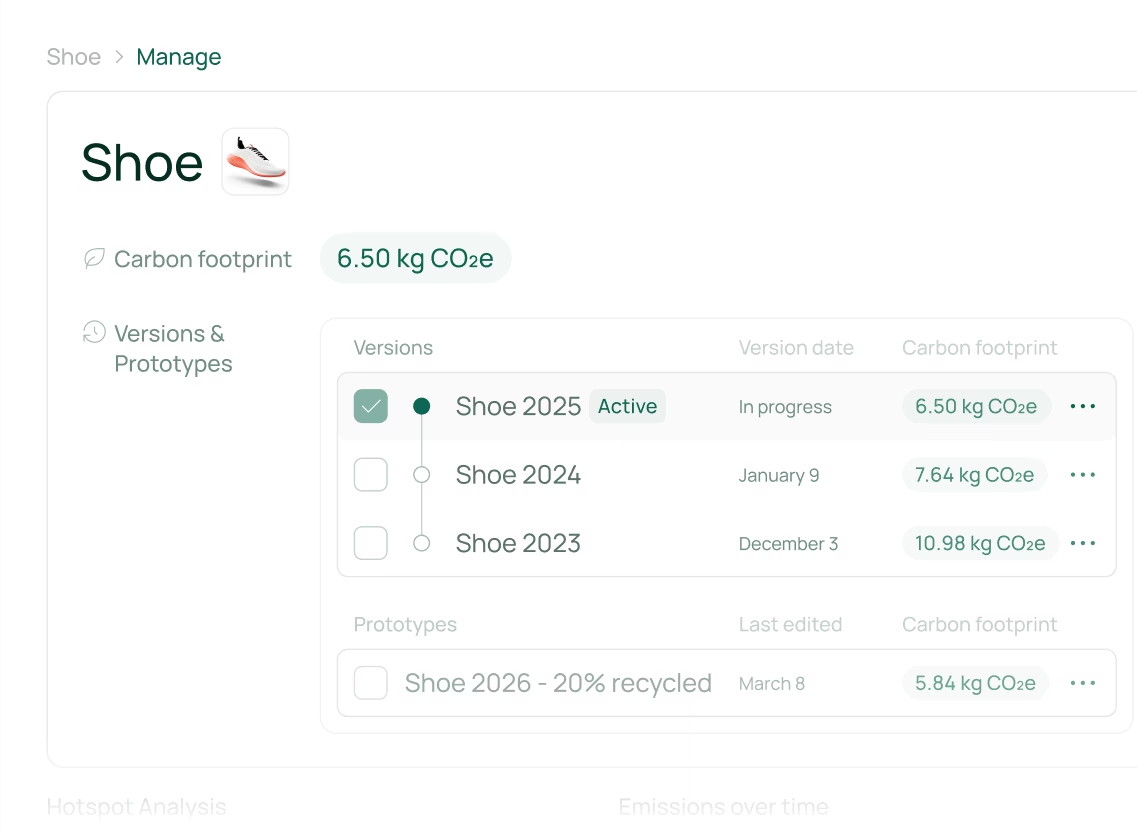
The ECGT renders "spend-based" estimates obsolete for product claims. Arbor calculates emissions using actual activity data (e.g materials and energy usage), providing the specific data needed to support specific claims.
Hotspot Analysis
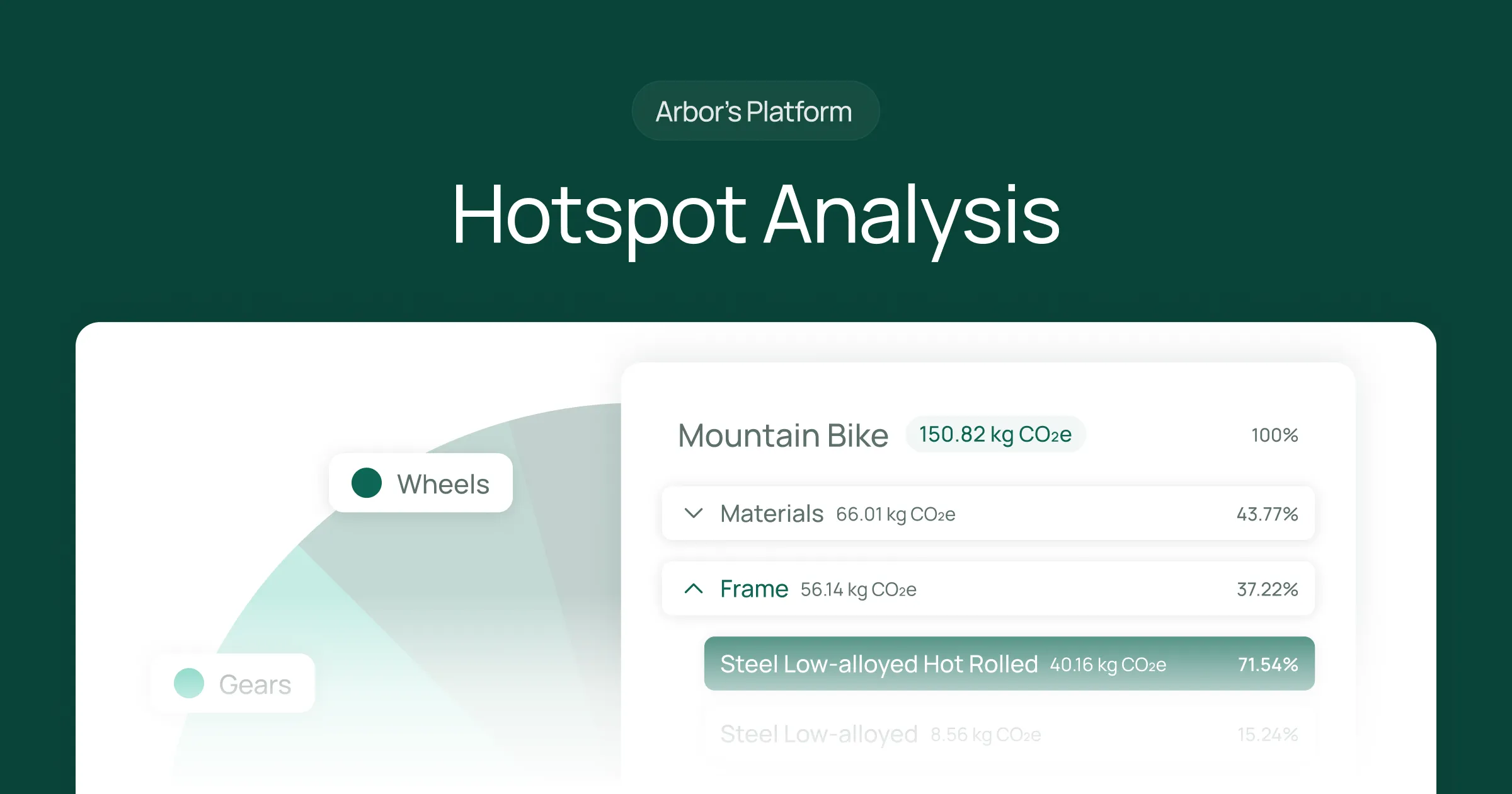
You cannot call a whole product "green" based on one sustainable part. Arbor’s Hotspot Analysis identifies exactly where your emissions come from, allowing you to make precise, lawful claims like "Upper made from 100% recycled cotton" rather than a misleading generic one.
Prototyping
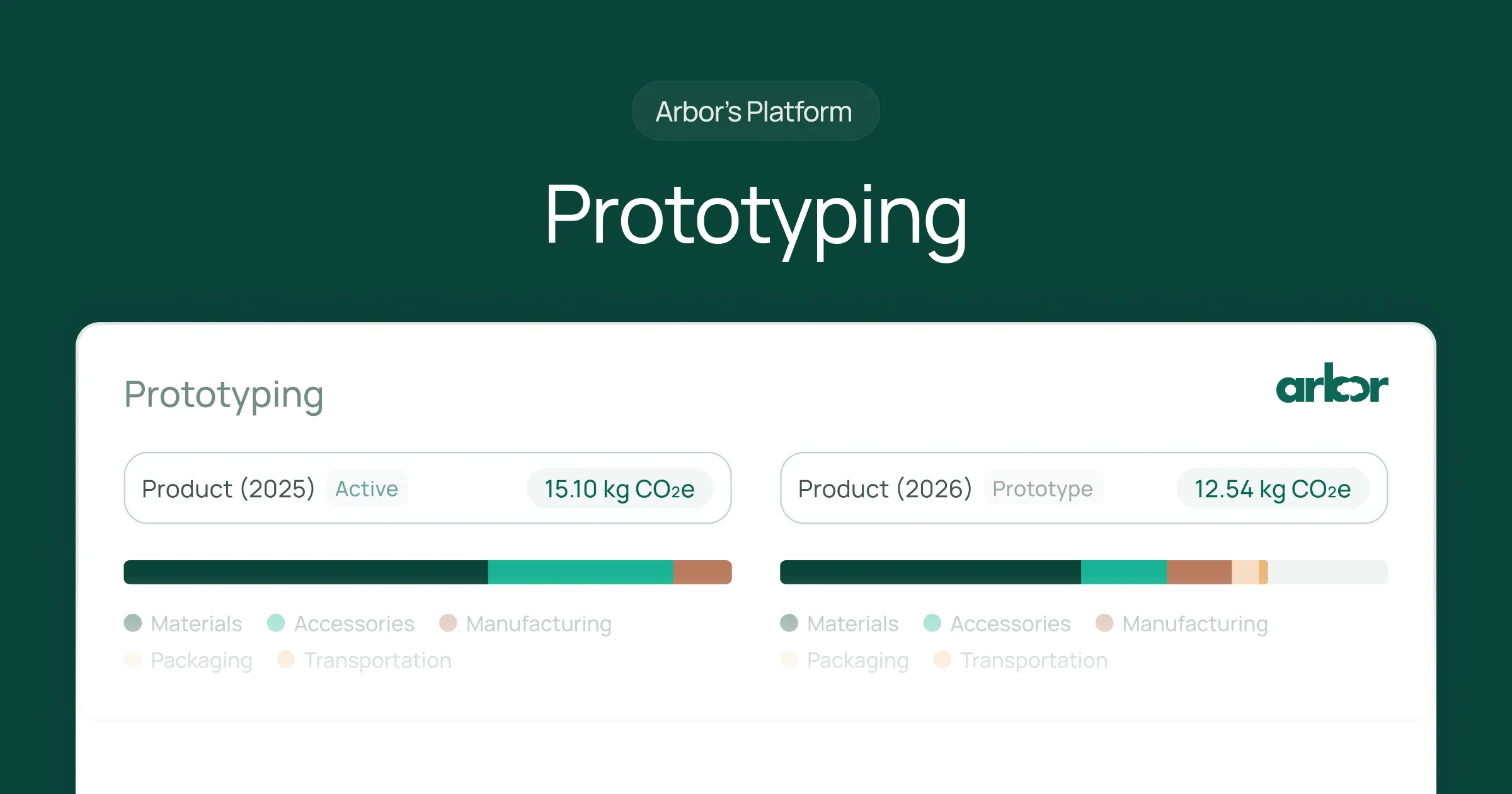
The best way to comply is to design a better product. Arbor’s Prototyping allows you to model carbon impacts before production, letting you engineer products that meet reduction targets from day one.
Ready to back your claims with audit-grade data?
Request a demo to see Arbor’s platform in action.
Summary
The Directive on Empowering Consumers for the Green Transition (ECGT) is a new European Union regulation that aims to eliminate greenwashing by enforcing strict rules on environmental marketing.
Starting September 27, 2026, the law prohibits companies from using generic terms like "eco-friendly" or "green" unless they are backed by recognized certification schemes.
It also bans claims of "climate neutrality" for products if those claims rely on carbon offsetting rather than actual emission reductions.
These rules apply globally to any business selling to EU consumers, meaning traders must now rely on specific, verifiable data rather than vague promises to avoid significant financial penalties and legal risks.
Ensure your business is ready for the new era of transparency.
Schedule a free consultation with our experts to start measuring what matters.
Measure your carbon emissions with Arbor
Simple, easy carbon accounting.
FAQ about the ECGT Directive
What is the main purpose of the ECGT Directive?
The ECGT is designed to stop greenwashing and protect consumers from misleading environmental claims. It creates a legal "blacklist" of prohibited marketing practices, such as using vague terms like "nature's friend" without substantiation or using self-applied sustainability labels that are not third-party verified.
When must businesses fully comply with the new rules?
While the directive is already an official EU law, the critical deadline for businesses is September 27, 2026. By this date, all products sold to EU consumers must comply with the new marketing and transparency requirements to avoid penalties.
Does the ECGT apply to companies outside of Europe?
Yes, the directive applies to any trader engaging in commercial practices towards EU consumers, regardless of the company's headquarters. US, Canadian, or Asian companies selling goods online or in physical stores in the EU must comply with these regulations.
Can companies still claim their products are "Carbon Neutral"?
No, the ECGT explicitly bans claiming that a product has a neutral or positive environmental impact if that claim is based on carbon offsetting. Companies can only advertise reduced climate impacts if they have achieved actual emissions reductions across their own value chains.




.webp)

.webp)


%20Arbor.avif)




%20Arbor.avif)

.avif)


%20Arbor%20Canada.avif)
.avif)
%20Arbor.avif)
.avif)




_.avif)
.avif)
%20Arbor.avif)


%20Software%20and%20Tools.avif)


.avif)
.avif)


%20EU%20Regulation.avif)




.avif)


%20Arbor.avif)




_%20_%20Carbon%20101.avif)


.avif)


