


- Move beyond estimates: Regulations such as CSRD and CBAM are driving a shift from spend-based estimates to primary supplier carbon data to improve accuracy and compliance.
- Combat survey fatigue: Suppliers are overwhelmed by requests. Adopt a frictionless, standardized supplier engagement approach to improve response rates and data quality.
- Segment and prioritize: Use the Pareto Principle to focus your efforts on the 20% of suppliers that account for 80% of your Scope 3 emissions.
- Align incentives: Use gamification (badges, leaderboards) and financial incentives (preferential financing) to motivate suppliers to decarbonize.
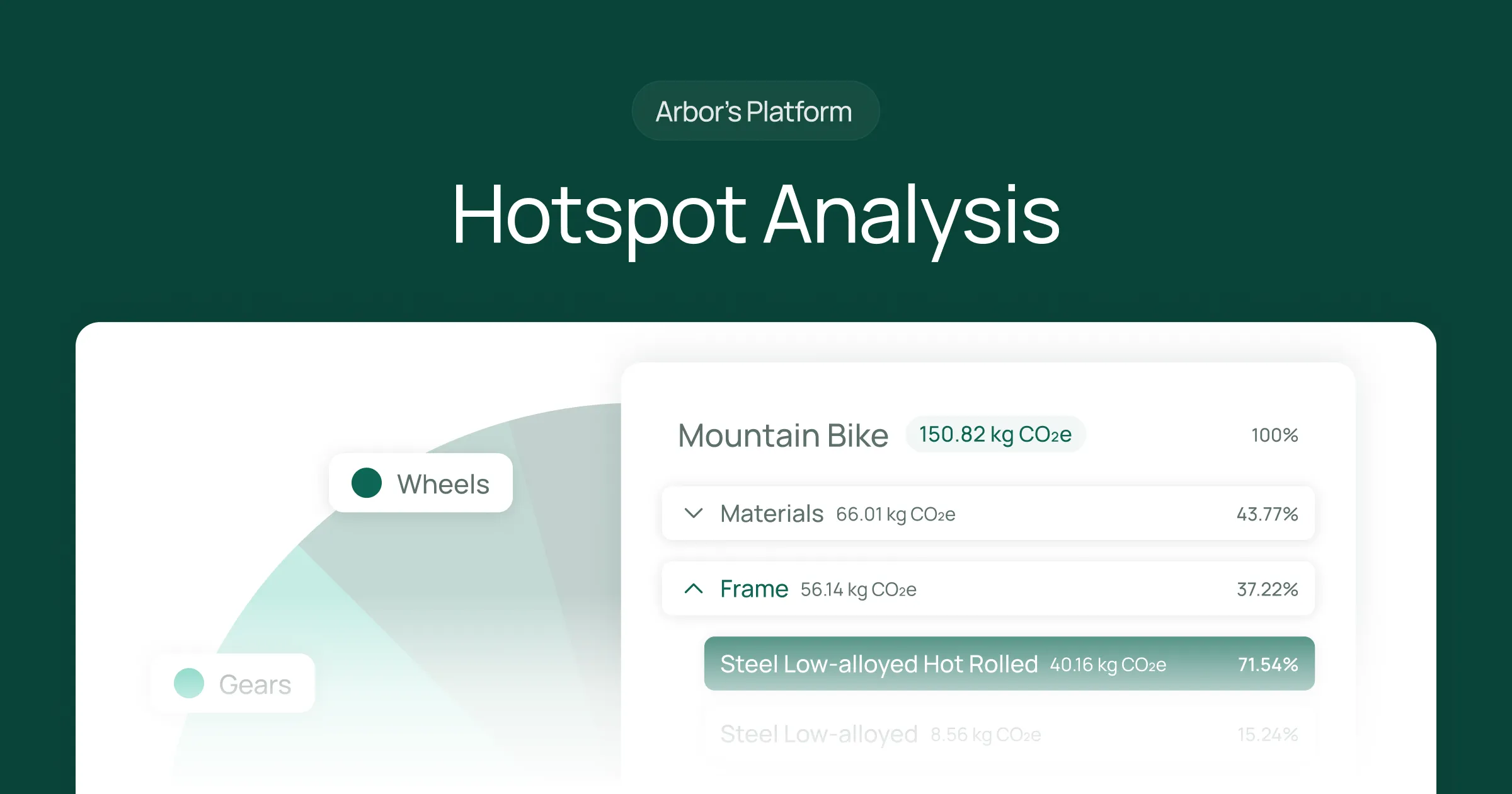
- Platforms like Arbor automate carbon accounting and provide tools such as Hotspot Analysis to translate data into actionable decarbonization strategies.
Building a resilient supply chain through better data
The global economy is going through a massive structural shift right now. We are moving away from a time when sustainability was just a nice-to-have corporate social responsibility activity. Today, it is a central pillar of financial and operational compliance.
At the heart of this change is the need for rigorous accounting of Scope 3 carbon emissions.
For most companies, especially in manufacturing and retail, these upstream and downstream emissions make up more than 90% of their total carbon footprint.
But here is the problem.
Most companies still rely on estimates and spend-based proxies rather than primary data from their supply chains. To address this, you need a solid supplier engagement program that goes beyond simple surveys and fosters real collaboration.
In this guide, we will break down how to design a supplier engagement framework that works, how to overcome "survey fatigue," and how to use data to drive real value chain decarbonization.
Why supplier engagement is no longer optional
For a long time, corporate carbon accounting relied heavily on secondary data. Companies would take their procurement spend ledger, how much they spent on steel, plastic, or shipping and multiply those dollar figures by the average emission factors.
While this "spend-based" method gives a high-level heatmap of emissions, it is fundamentally flawed for active decarbonization.
Think about it this way.
If you choose to buy a higher-quality, longer-lasting material that costs more, or if you pay a premium for a supplier who uses renewable energy, a spend-based calculation would oddly show an increase in your carbon footprint because your financial spend went up. It fails to capture the specific hard work your suppliers may be doing to reduce their impact.
The regulatory tsunami
This shift toward primary data is being forced by a wave of new regulations. We are seeing a move from voluntary disclosures to hard, enforceable law.
The European Union’s CSRD (Corporate Sustainability Reporting Directive) is perhaps the most ambitious. It mandates that large companies disclose impacts across their entire value chain. This requires granular carbon data from suppliers to substantiate claims.
Then there is the CBAM (Carbon Border Adjustment Mechanism), which effectively acts as a carbon tariff on goods entering the EU. Importers must declare the "embedded emissions" of goods like steel and aluminum. If suppliers cannot provide actual data, importers are forced to use punitive default values.
In the United States, California’s SB 253 is setting a de facto national standard, mandating Scope 3 emissions reporting for large companies doing business in the state. This forces disclosure onto the agendas of thousands of suppliers who may not be directly subject to the law but sell to those who are.
Commercial pressure: "No data, no business."
Beyond the law, the market itself is changing. Major multinational companies are setting climate strategy targets validated by the Science Based Targets initiative (SBTi). To hit these targets, they must engage their suppliers.
Procurement criteria are evolving fast. Sustainability metrics are moving from a bonus in RFPs to a qualifying criterion. If you cannot provide a Product Carbon Footprint (PCF), you might find yourself excluded from bidding on contracts. In this new reality, providing data is a gateway to market access.
The hurdles: Why suppliers aren't replying
If supplier engagement is so important, why is it so hard? The ecosystem is currently plagued by inefficiencies, resulting in poor data quality and strained relationships.
The "survey fatigue" phenomenon
Suppliers are inundated with uncoordinated sustainability questionnaires. One customer might request "total Scope 1 and 2 emissions," while another requests emissions allocated by revenue, and a third requests emissions allocated by mass.
This fragmentation creates massive administrative work. Suppliers often deprioritize these requests or provide low-quality estimates just to "check the box."
To address this, we need solutions that enable a "write once, share many" approach, where a supplier can upload data once and share it with multiple stakeholders.
The capability gap
A significant portion of the global supply chain consists of Small and Medium Enterprises (SMEs).
These companies often lack dedicated sustainability teams. They may not understand the technical difference between "Scope 1" and "Scope 2," let alone how to calculate a complex Life Cycle Assessment (LCA).
Effective engagement cannot just be about data extraction. It has to be about education. You have to meet suppliers where they are, perhaps starting with simple activity data like electricity bills before demanding a certified ISO 14067 report.
Designing a winning supplier engagement framework
Buying carbon accounting software is just the first step. To achieve results, you need a programmatic approach.
Here is one framework you can use to design your program.
Phase 1: Segmentation and prioritization
Do not try to engage all suppliers at once with the same intensity. The "Pareto Principle" applies strongly here: often 20% of suppliers account for 80% of the emissions.
- Strategic importance: Cross-reference emissions volume with strategic importance. A high-emitting supplier that is easily replaceable requires a different strategy than a sole-source partner.
- Maturity assessment: Categorize suppliers by their climate maturity. Leaders who already report to CDP can handle requests for PCF data. Beginners need more hand-holding.
Phase 2: The "Ask" and communication
How you ask matters. The communication must articulate a clear business case for the supplier. It cannot simply be "we need this for our report."
For example, it should be "we need this to maintain our trade relationship under new carbon tariffs" or "we are prioritizing low-carbon suppliers for future contracts."
Aligning data requests with standard reporting cycles also helps minimize the workload.
Phase 3: Capacity building
Don't just ask, help. Best-in-class programs invest in resources to help suppliers generate the data they need.
This could mean hosting webinars to explain the basics of measuring emissions. It could also mean providing access to tools.
Leading companies often provide their suppliers with access to a platform like Arbor to simplify calculations. This lowers the barrier to entry and improves data consistency.
Phase 4: Monitoring and feedback loops
Engagement is a cycle, not a one-off event. Suppliers need to know where they stand. Providing a scorecard that shows their emissions intensity relative to an industry benchmark is a powerful motivator.
Making it stick: Incentives and gamification
To move suppliers from passive data submission to active decarbonization, you need to align incentives. This is where gamification and financial mechanics come into play.
Gamification
Suppliers are competitive organizations. Being recognized as a "Sustainability Leader" has brand value. You can use badges or status tiers (Gold, Silver, Bronze) to recognize top performers. They can then use these assets in their own marketing to attract other customers.
Financial incentives
While recognition is nice, money talks. Sustainable procurement strategies often link performance to the cost of capital.
Some major companies partner with banks to offer preferential financing rates to suppliers with high sustainability scores. This provides immediate cash flow benefits that can be reinvested in efficiency projects.
Others offer longer-term contracts to suppliers who commit to significant decarbonization investments, thereby reducing supplier risk. Suppliers are incentivized to share data when they see it could help them secure more business.
Practical steps: What to actually ask for
When you request data, especially for a Product Carbon Footprint (PCF), be specific.
Requesting data that is needed for a PCF compliant with ISO 14067 standards ensures that the information is usable for compliance and comparison.
Here is an example of some data fields you should request:
If a supplier is unable to provide direct carbon emissions data, companies can utilize tools such as Arbor.
This allows them to collect the necessary underlying activity data, enabling the supplier to calculate their own emissions before sharing them with you.
How Arbor streamlines the process
Arbor is a carbon accounting platform that helps companies calculate and reduce emissions to achieve net-zero. Our platform directly addresses the friction points in supplier engagement.
Frictionless data collection
We focus on automated data ingestion. In addition to manual data entry, suppliers can upload utility bills or spreadsheets, which our AI-powered system then parses and validates.
From data to insights
Arbor uses a hybrid calculation mechanism. We know 100% primary data is rare on day one. Our platform combines available supplier primary data with audit-grade secondary data to fill gaps. This allows you to generate a complete inventory immediately.
Once the data is in, our Hotspot Analysis feature pinpoints the specific materials or suppliers that contribute most to your product footprint and your scope 3 as a whole. This lets you prioritize your efforts where they matter most.
Collaborative prototyping
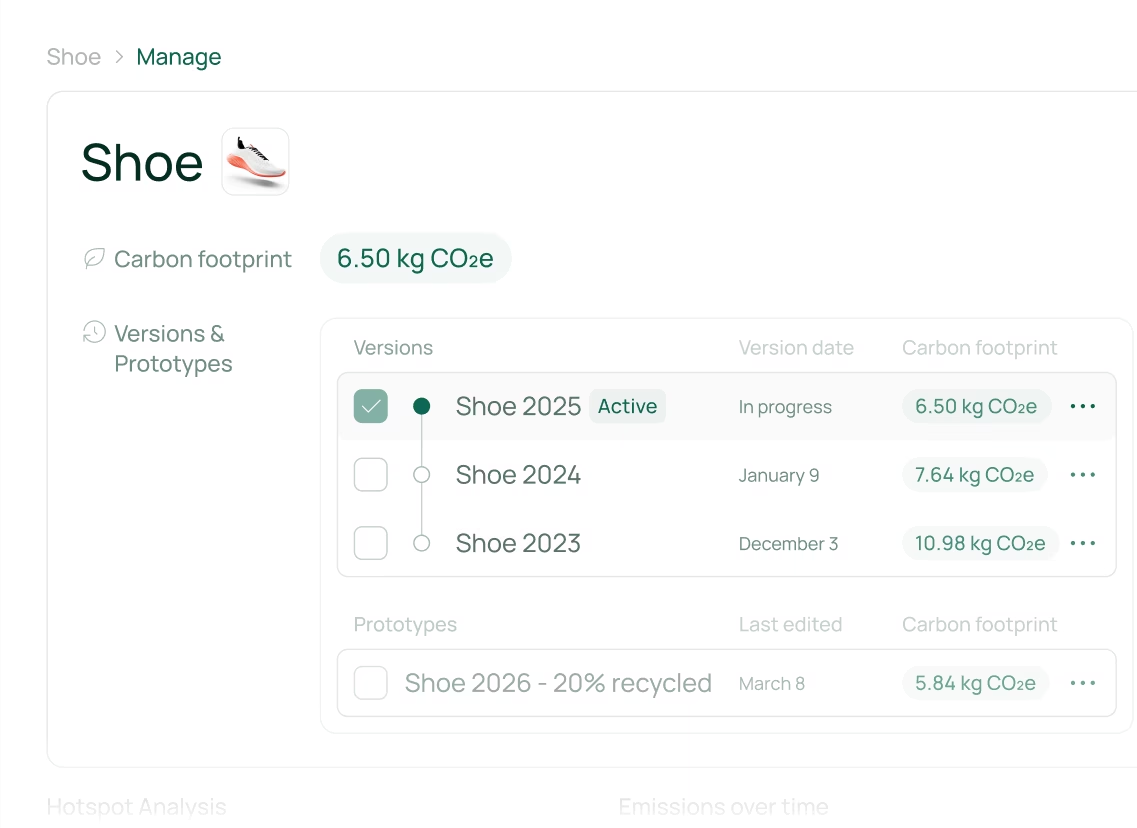
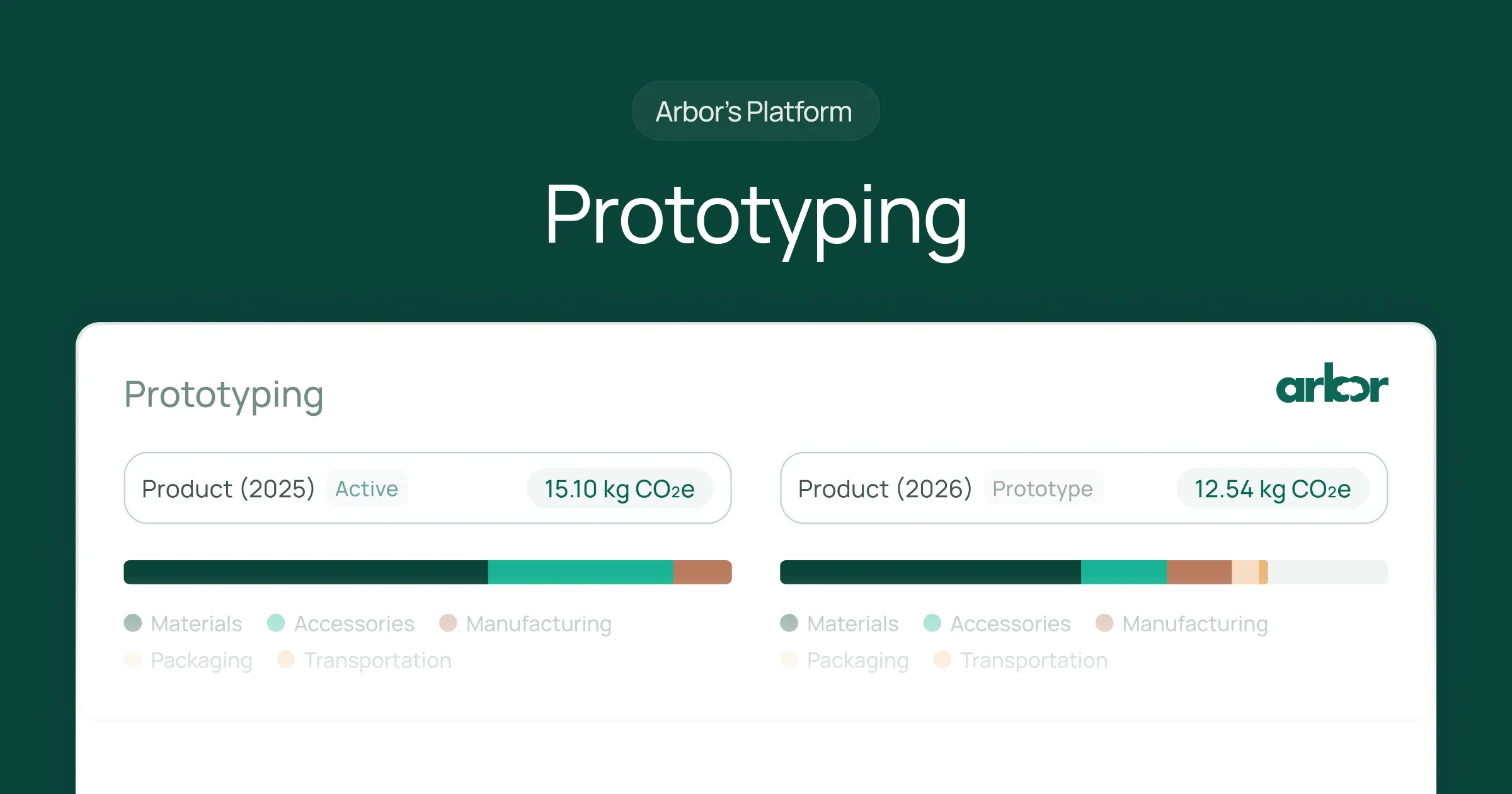
Engagement should be proactive. With Product Prototyping, you can simulate supply chain changes to see their impact.
You can ask, "What if we switch to a supplier in Turkey who uses solar power?" This shifts the conversation from retrospective reporting to collaborative innovation.
Summary
Supplier engagement is the bridge between your internal climate strategy and your external operational reality. By providing the digital infrastructure that makes engagement frictionless and standardized, you can empower your partners to move beyond the compliance trap.
The winning formula is clear:
- Start with strategy: Segment your suppliers based on impact.
- Deploy technology: Use a platform like Arbor to automate collection and ensure ISO compliance.
- Align incentives: Use gamification and financial levers to motivate action.
- Communicate value: Treat suppliers as partners in a shared journey.
As regulations such as CSRD and CBAM tighten, companies that master this engagement engine will secure their supply chains and win market trust.
Ready to transform your supply chain?
Schedule a free consultation with our experts to see how Arbor can help your business.
Mesurez vos émissions de carbone avec Arbor
Comptabilité du carbone simple et facile.
FAQ about supplier engagement
Why is primary data better than spend-based data for Scope 3?
Spend-based data uses financial averages that penalize you for buying higher-quality (more expensive) sustainable materials. Primary data reflects the actual energy and materials used, allowing you to track real decarbonization progress and make informed procurement decisions.
How can I get small suppliers to provide carbon data?
Start by lowering the barrier to entry. Offer education on the basics of carbon footprint measurement and provide access to user-friendly tools or platforms, such as Arbor, that automate calculations.
What are the risks of ignoring supplier engagement?
Ignoring supplier engagement exposes your company to regulatory non-compliance (like CBAM taxes), reputational damage, and loss of business from major clients who require Net-zero supply chains.
Does Arbor help with ISO 14067 compliance?
Yes, Arbor is a GRI-certified and ISO-compliant platform. We help you collect the specific data fields required for ISO 14067, ensuring your Product Carbon Footprints are audit-ready and verifiable.


.webp)
%20Directive.webp)

.webp)





%20Arbor.avif)


%20Arbor.avif)

.avif)

%20Arbor%20Canada.avif)
.avif)
%20Arbor.avif)
.avif)


_.avif)
.avif)
%20Arbor.avif)


%20Software%20and%20Tools.avif)


.avif)
.avif)


%20EU%20Regulation.avif)


.avif)


.avif)



%20Arbor.avif)


.avif)


