

- Supply Chain as Strategy: Supply chains have evolved from cost centers into strategic assets that drive value, resilience, and sustainability.
- Visibility is Key: A "visibility gap" often exists beyond Tier 1. N-Tier mapping is essential for identifying hidden risks deep in the network.
- Sustainability & Scope 3: Most environmental impact lies in Scope 3 emissions. Accurate measurement requires hybrid models combining primary and secondary data.
- Resilience Focus: The strategy has shifted from "Just-in-Time" to "Just-in-Case," utilizing buffers, nearshoring, and dual sourcing.
- Strategic Planning: IBP aligns operations with long-term financial strategy, enabling sophisticated scenario planning beyond tactical S&OP.
Modern supply chains are moving beyond the linear "take-make-waste" model. Companies are implementing sophisticated, circular ecosystems that deliver value from raw materials through regeneration.
This guide unpacks the critical shifts in visibility, planning, and sustainability that are redefining global commerce.
The Anatomy of the Modern Supply Chain
To understand the strategic imperative of supply chain management (SCM), we must look beyond simple logistics.
At its core, SCM synchronizes supply with demand to measure global performance. It is the coordination of sourcing, manufacturing, and delivery, but for the large enterprise, it represents a much broader strategic framework.
Core Components of Global Supply Chain Strategy
End-to-End (E2E) Integration and Global Networks
The concept of End-to-End (E2E) management is the gold standard. Unlike siloed models, E2E integrates procurement, production, and logistics into a continuous workflow.
This holistic view enables businesses to evaluate risk across the full product lifecycle. This occurs on a vast, interconnected global grid where supply chains span multiple tiers, crossing borders and regulatory regimes. It bridges the gap between boardroom strategy and factory floor execution.
The Shift to Resilience: Just-in-Time to Just-in-Case
The "when" of SCM has transformed.
For decades, "Just-in-Time" (JIT) dominated, prioritizing lean manufacturing to minimize costs. However, global disruptions exposed the fragility of JIT.
The current strategic zeitgeist is shifting towards "Just-in-Case" (JIC). Companies now prioritize resilience, building risk buffers and increasing strategic inventories to mitigate large-scale disruptions.
Value Creation and The Sustainability Mandate
Why invest millions in SCM? The driver has shifted from simple cost minimization to maximizing customer satisfaction and ensuring business continuity.
Crucially, sustainability is now a primary driver. With regulations like the EU's CSRD and consumer demand for ethical products, SCM has become the primary vehicle for delivering on climate strategy commitments.
The Structure of the Supply Chain: Tiered Visibility
Large-scale supply chains are structured in layers, or "tiers," based on supplier proximity.
Understanding this hierarchy is essential for risk management.
- Tier 1: Direct suppliers (e.g., Contract Manufacturers). High visibility, lower risk.
- Tier 2: Sub-contractors providing components (e.g., Fabric Mills). Moderate visibility, hidden risks.
- Tier 3: Raw material sources (e.g., Cotton Farms, Mines). Low visibility, high ESG risk.
- Tier 4+: Basic input extraction. Non-existent visibility, extreme risk.
The Visibility Gap and N-Tier Mapping
For many enterprises, visibility ends at Tier 1. Research suggests that few organizations map suppliers beyond Tier 3, creating a critical "visibility gap."
Tier 3 suppliers often control inputs that become single points of failure. Leading organizations now engage in "N-Tier Mapping," using AI to create a "Digital Twin" of the network and identify deep-tier risks.
Strategic Planning Architectures
For large enterprises, ad hoc decision-making cannot align sales, finance, and operations. This alignment requires structured planning through Sales and Operations Planning (S&OP) and Integrated Business Planning (IBP).
S&OP vs. IBP: From Tactical to Strategic
The evolution from S&OP to IBP represents a shift from operational balancing to financial strategy.
S&OP focuses on balancing supply and demand tactically over a 6-12 month horizon. It is typically owned by operations and deals in units and volume. In contrast, IBP aligns operations with strategy over a 24-36 month horizon.
Sponsored by the C-suite, IBP integrates financial planning into decision-making, allowing companies to run sophisticated scenarios.
For example, a company can simulate the EBITDA impact of a geopolitical risk event and weigh the financial pros and cons of nearshoring production.
Supply Chain Design and Visibility
Before a supply chain can be optimized or made sustainable, it must be visible.
The Imperative of Mapping and Technology
Supply chain mapping involves documenting thousands of suppliers. Modern platforms leverage AI to build "living maps."
- Automated Discovery: AI automatically maps the value chain using product master data to identify potential Tier 2 and Tier 3 suppliers.
- Risk Overlays: Platforms overlay real-time risk data, such as geopolitical instability or forced labour risks, allowing for proactive management.
Visibility enables "first-mover advantage." Instead of reacting to a disruption, a company with N-Tier visibility can activate a dual-source supplier before competitors are even aware of the issue.
Operational Excellence and Digital Transformation
Operational excellence is increasingly defined by the application of Artificial Intelligence (AI) and Digital Twins.
Digital Twins and AI Logistics
A Digital Twin is a virtual replica of the supply chain used to model scenarios. Retailers use these to simulate inventory policies, balancing service levels against holding costs.
Simultaneously, AI is revolutionizing logistics, a major source of emissions in certain industries.
Algorithmic route optimization analyzes real-time data to calculate optimal paths, reducing miles driven and carbon emissions. Predictive logistics enables companies to anticipate delays from external factors such as port congestion, allowing proactive rerouting.
The Sustainability Pillar: Sustainable Supply Chain Management (SSCM)
Sustainability is a strategic imperative driven by investor pressure and regulation. SSCM involves managing environmental, social, and economic impacts throughout the product lifecycle.
The Business Case for SSCM
Research shows SSCM drives superior performance. Proactive ESG risk management ensures continuity, while sustainable practices often lower operating costs through efficiency.
Furthermore, sustainable brands frequently outperform the market, and investors increasingly use ESG ratings to determine capital allocation.
Decarbonization and Scope 3 Emissions
For product businesses, 80% to 90% of the carbon footprint is attributable to Scope 3 emissions (indirect value-chain emissions).
Calculating Scope 3 Category 1 emissions is complex.
The methods range in accuracy:
- Spend-Based: Uses financial data. Easy but inaccurate.
- Average-Data: Uses material weight and industry averages.
- Supplier-Specific: Uses actual primary data from suppliers. The "Gold Standard" is hard to scale.
- Hybrid Method: The recommended approach. It combines supplier-specific data for major partners with averages for the tail end. This is what Arbor uses.
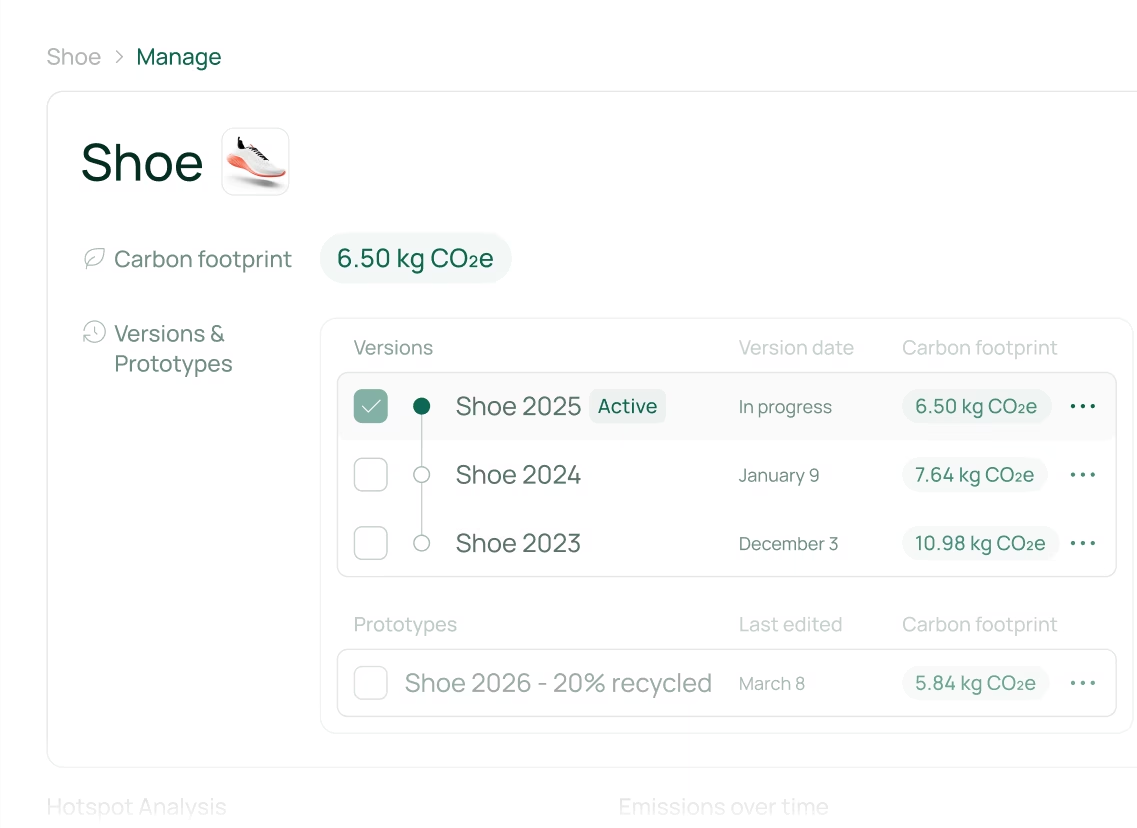
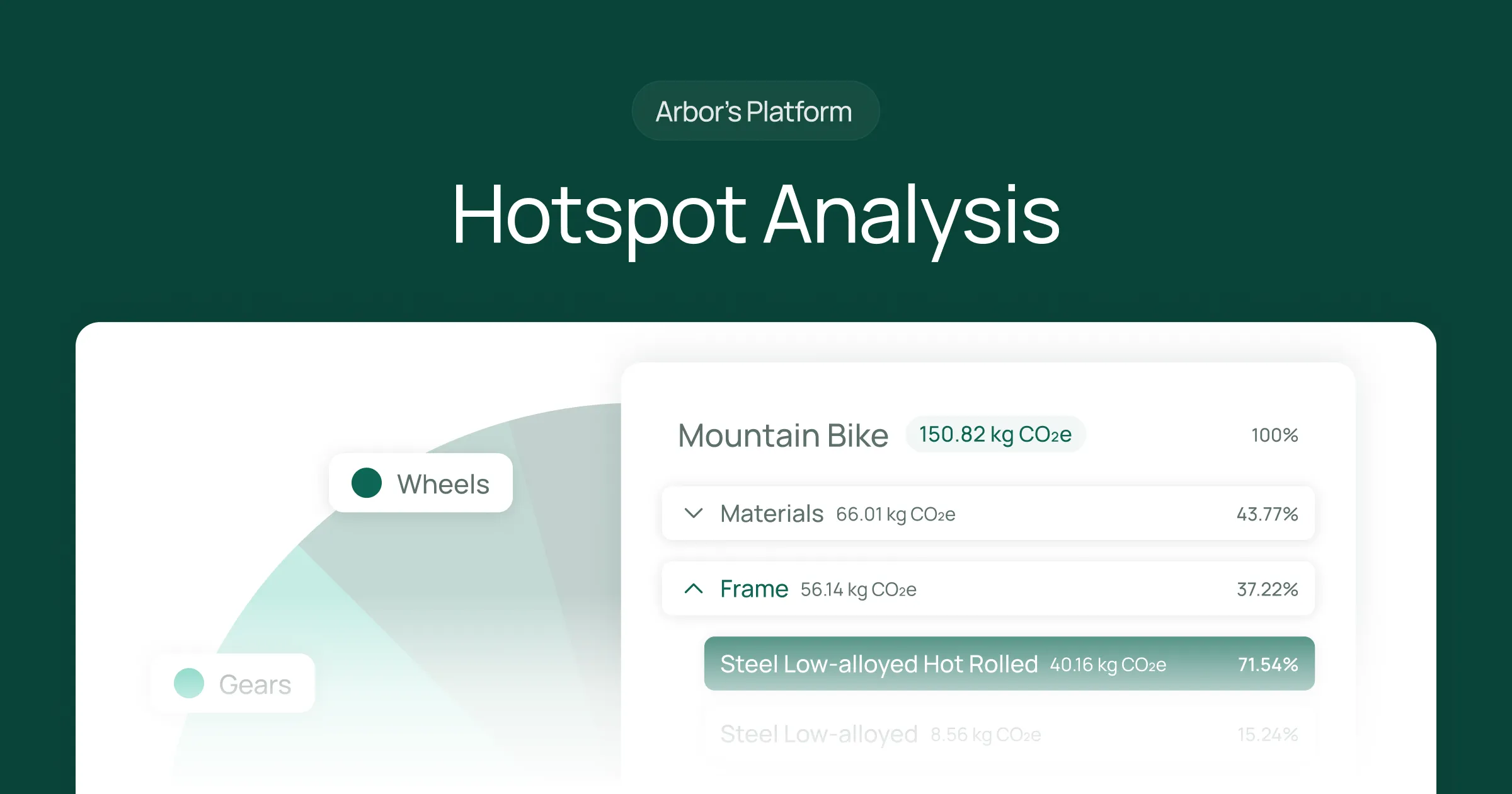
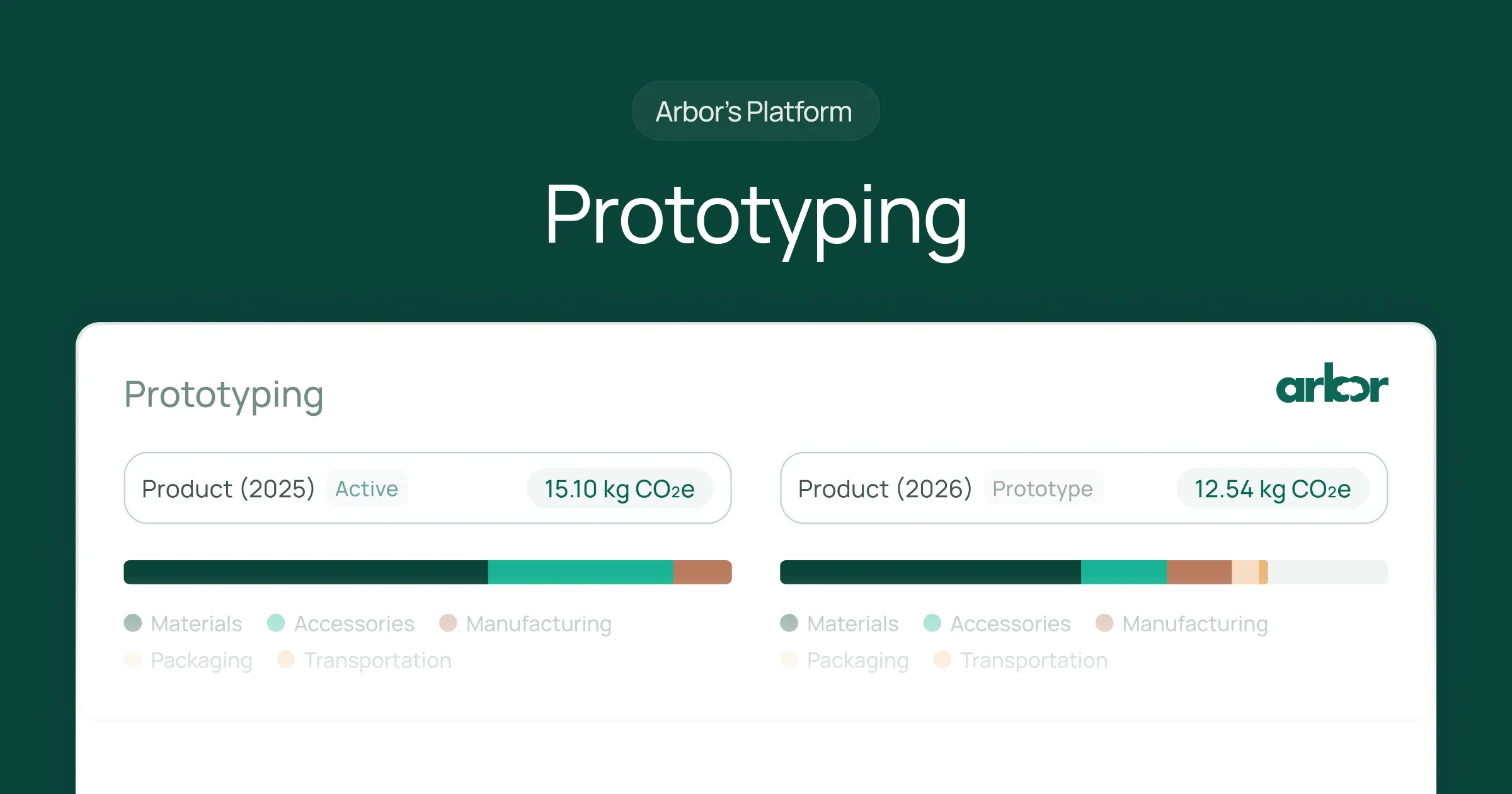
Arbor’s platform facilitates this hybrid approach by automating Product Carbon Footprinting (PCF) to identify hotspots and accurately model reductions.
Circularity and New Business Models
The future is the Circular Supply Chain, where waste is designed out, and materials are kept in use.
Product-as-a-Service (PaaS) and Remanufacturing
In PaaS, manufacturers retain ownership and sell performance rather than the asset. This shifts incentives toward durability and longevity. Similarly, remanufacturing involves returning used products to original specifications.
This captures high-margin revenue from waste and significantly reduces energy consumption compared to manufacturing new parts.
Risk, Resilience, and Geopolitics
The supply chain is the primary vector for geopolitical risk. To survive "slowbalization," companies are deploying resilience strategies:
- China Plus One: Diversifying manufacturing to regions like Vietnam or India while maintaining a presence in China.
- Nearshoring: Moving suppliers closer to end markets to reduce lead times.
- Inventory Buffers: Increasing inventory as a primary shock mitigation strategy.
- Dual Sourcing: Ensuring critical components are never dependent on a single source.
Summary
For the average large enterprise, your supply chain is not a linear path of execution. They’re circular, digital, and strategic web where financial ambition meets operations.
The successful supply chain of the future will be defined by Visibility (N-Tier mapping), Agility (AI-driven logistics), and Circularity. As we move forward, thriving companies will view their supply chain not as a cost to be cut, but as a valuable competitive moat that competitors will find difficult to replicate.
Ready to transform your supply chain?
Schedule a free consultation with our experts to see how Arbor can help your business.
Mesurez vos émissions de carbone avec Arbor
Comptabilité du carbone simple et facile.
FAQ about supply chains
What is the difference between S&OP and IBP?
S&OP is tactical, balancing supply and demand units over 6-12 months. IBP is strategic, aligning operations with financial goals (revenue, EBITDA) over 24-36 months to drive long-term value.
How do you measure Scope 3 emissions?
Scope 3 emissions are measured using spend-based, average-data, supplier-specific, or hybrid methods. The hybrid method is best for enterprises, combining specific carbon data from key suppliers with industry averages for the rest.
What is N-Tier mapping?
N-Tier mapping visualizes suppliers beyond Tier 1, extending to Tier 2 and Tier 3, as well as raw materials. It is crucial for uncovering hidden risks such as forced labour or environmental violations deep within the supply chain.
Why is supply chain visibility important?
Visibility enables companies to track products and supply chain risks across their entire networks. It enables proactive disruption management, inventory optimization, and compliance with strict sustainability regulations.
What is a circular supply chain?
A circular supply chain minimizes waste by regenerating value. It uses models such as Product-as-a-Service and remanufacturing to extend the use of materials, reducing reliance on virgin resources.

.webp)
%20Directive.webp)

.webp)
%20Arbor.avif)

%20Arbor.avif)
.avif)
%20Arbor%20Canada.avif)
.avif)
%20Arbor.avif)
.avif)

_.avif)
.avif)
%20Arbor.avif)


%20Software%20and%20Tools.avif)


.avif)
.avif)


%20EU%20Regulation.avif)


.avif)


.avif)



%20Arbor.avif)


.avif)


